Proudly serving Phoenix, Glendale, Scottsdale, Tempe, Mesa, Chandler & surrounding areasCall or Text 24/7: 480-210-2603

Comprehensive Mobile Pre-Purchase Car Inspections in Phoenix, AZ

Phoenix Mobile Car Mechanic performs on-site pre-purchase car inspections throughout Phoenix for private-party, dealer-lot, residential, and fleet purchases. We check engine and transmission condition, brakes and suspension, electrical and charging performance, cooling-system health, and structural clues before you commit. The same mobile team also handles check engine light diagnostics, brake repair, battery and charging-system repairs, oil changes, AC service, cooling-system repair, and ignition work. Because we come to the parked vehicle, buyers can arrange an independent assessment without asking a seller to drive across town.

Phoenix has over 1.6 million residents, and the metro area has an estimated 5.19 million people; thousands of private-party and dealer-lot used vehicles change hands across the Valley every month. Desert heat regularly tops 110 degrees from May through September, accelerating wear on belts, hoses, seals, batteries, AC parts, and cooling components. A short drive around Camelback Road may not expose a transmission that slips only after warming up or a marginal radiator that struggles under summer load. An independent mobile inspection gives you mechanical findings before money changes hands.

Our lift-free process uses an OBD-II code scanner, digital multimeter, battery load testing, tread depth gauges, physical checks, and a road test when the seller allows it. We work through an ASE-aligned checklist and document findings, photos, and recommendations for the buyer.

Phoenix Mobile Car Mechanic provides pre-purchase car inspections in Phoenix, Scottsdale, Tempe, Mesa, Chandler, and Glendale.

★ ★ ★ ★ ★4.9/5 Average Rating · 20+ Years of Experience · Thousands of Customers Helped · Licensed & Insured · Residential & Commercial

Pre-Purchase Inspection Benefits

What Is a Pre-Purchase Car Inspection?

A pre-purchase car inspection is an independent mechanical and physical evaluation performed before you buy a used vehicle. It looks beyond appearance and asking price to identify conditions that may require repair, closer testing, or a different purchase decision.

The assessment combines diagnostic codes, fluid and component checks, exterior and interior observations, structural clues, and real driving behavior. A vehicle history report can add context, but physical evidence such as paint overspray, uneven panel gaps, fluid leaks, or inconsistent fastener marks may reveal repairs the history does not show.

Because the inspection happens where the vehicle is parked, the buyer can evaluate a private seller's driveway, a dealer lot, an apartment complex, or a home garage without arranging a shop drop-off. Seeing the car cold and in its normal setting can expose startup noises, overnight fluid puddling, and idle behavior that a pre-warmed vehicle may hide.

Benefits of an Independent Inspection

The goal is not to make the decision for you; it is to replace guesswork with documented condition information. Findings can support a price negotiation, a repair request, or the choice to walk away before accepting an expensive problem.

  • Independent findings prepared for the buyer
  • On-site service at a driveway, dealer lot, apartment, or garage
  • Stored and pending OBD-II code review
  • Mechanical, electrical, structural, and road-test observations
  • Photos of identified problem areas
  • Issues ranked by severity
  • Estimated repair costs included with recommendations
  • Clearer grounds to proceed, renegotiate, or walk away
Comprehensive Vehicle Checks

What Our Inspection Covers

A comprehensive inspection centers on four core systems-engine and transmission, brakes and suspension, electrical and charging, and cooling and fluids-then adds exterior, interior, structural, documentation, and road-test checks. Each area contributes evidence about the vehicle's current condition and the repairs a buyer may face after purchase.

Engine & Transmission Diagnostics

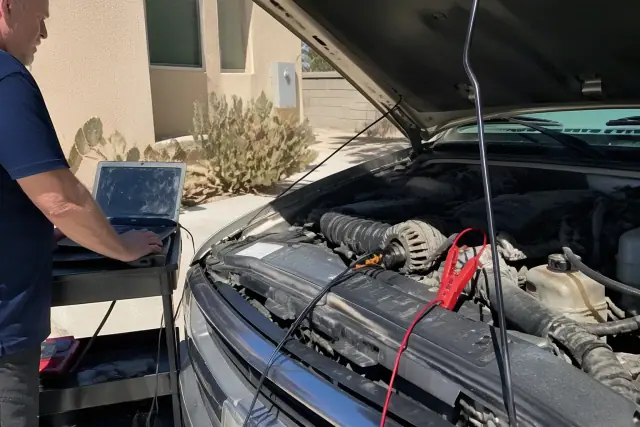
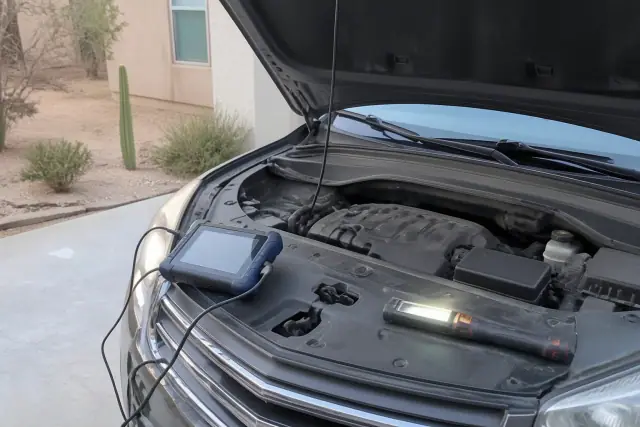
Diagnostic scan tools connected to a car engine during an inspection at a home in Phoenix, AZ.

We scan for stored and pending OBD-II codes, look for oil leaks around the valve cover and oil pan, inspect belts and hoses, and evaluate transmission engagement and shift quality. Delayed engagement, harsh shifts, burnt-smelling dark fluid, or slipping under acceleration can point to wear that may cost several thousand dollars to repair.

Request Estimate

Brake & Suspension Evaluation

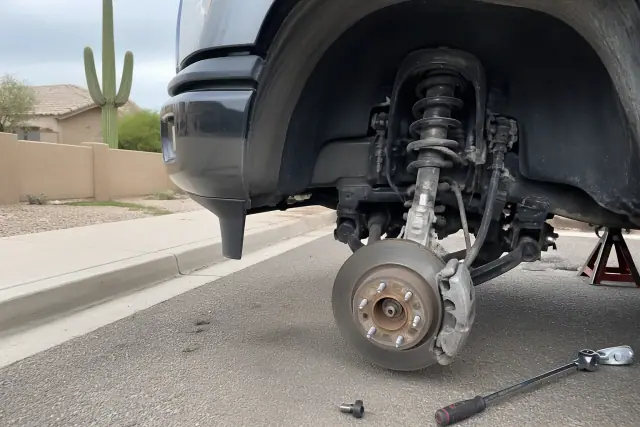
Mechanic performing a brake and suspension inspection on a car on a residential street in Phoenix, AZ.

Brake pad thickness is measured in millimeters, while rotor surfaces and thickness are checked for wear. We also inspect ball joints, tie rod ends, control arm bushings, shocks, and struts for play, leakage, and poor bounce response associated with miles on routes such as I-10 and Loop 101.

Request Estimate

Electrical & Charging Tests

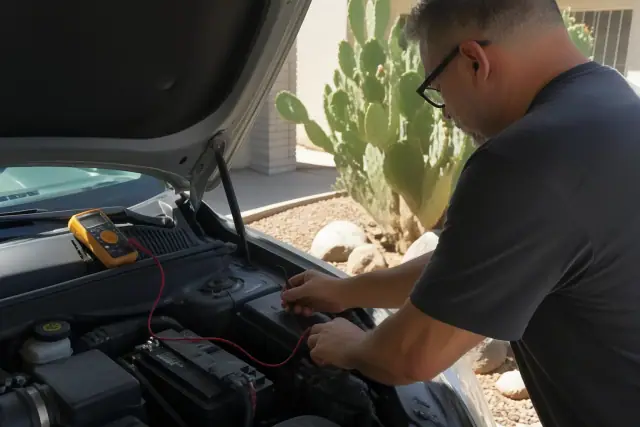
Technician performing electrical and battery testing on a car in a residential carport in Phoenix, AZ.

Battery load testing compares cold cranking amps with the manufacturer rating, and alternator output should measure between 13.5 and 14.5 volts under load. We also evaluate starter cranking speed, terminals, grounds, lights, windows, and dashboard warnings because weak charging systems commonly surprise buyers within 90 days of purchase.

Request Estimate

Cooling System & Fluid Analysis

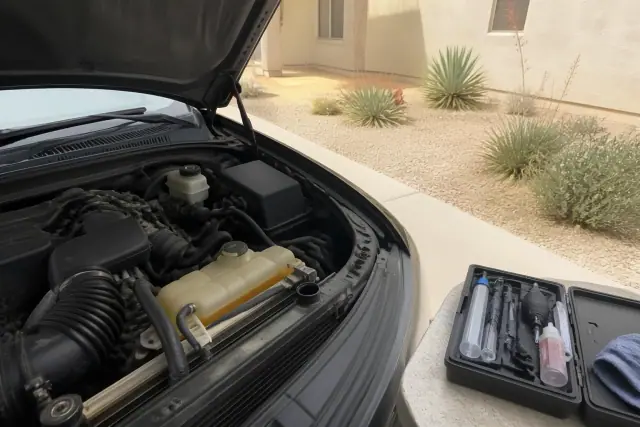
Technician performing a cooling system fluid analysis on a car in a Phoenix, AZ residential driveway.

We evaluate coolant condition, radiator cap pressure-test results, hose integrity, visible leaks, and AC operation with Phoenix summer driving in mind. A marginal cooling system that survives in a milder climate may fail within weeks here, so cracked radiators, weak hoses, and compressor concerns deserve attention before purchase.

Request Estimate

Frame, Collision & Flood Checks

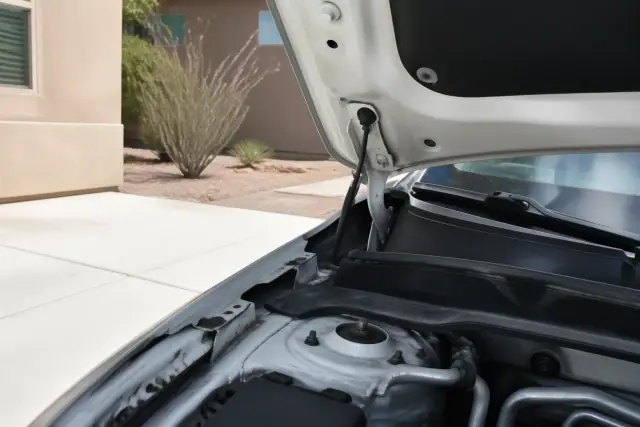
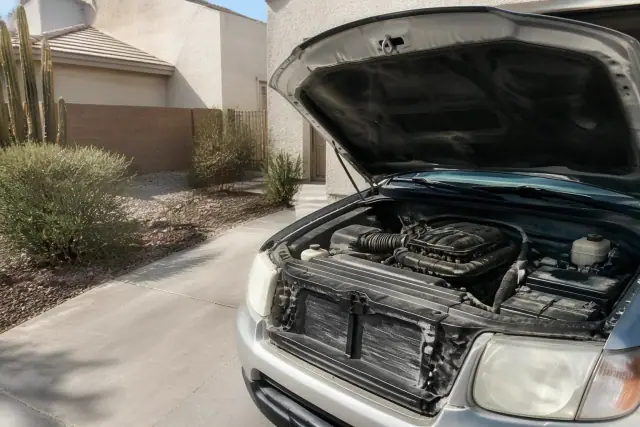
A vehicle with its hood raised during a pre-purchase inspection on a driveway in Phoenix, AZ.

Frame rails, unibody seams, wheel wells, door jambs, panel gaps, paint texture, VIN plates, airbag residue, and structural fastener marks are checked for prior repair clues. We also look for trunk water lines, musty carpet or headliner, corroded seat-rail bolts, and moisture behind trim that can indicate a vehicle relocated from a monsoon-affected region.

Request Estimate

Interior, Exterior & Road Test

Technician performing a pre-purchase car inspection on a vehicle with an open hood at a residence in Phoenix, AZ.

The walk-around covers body panels, glass, tire-wear patterns, and visible undercarriage rust, followed by upholstery, electronics, HVAC function, and warning lights inside. When the seller permits a road test, we evaluate acceleration, braking, steering alignment, transmission shift points, and unusual noises under load.

Request Estimate
Inspection Options

Pre-Purchase Inspection Options

Inspection scope depends on where the vehicle is offered, its type, the diagnostic tools it requires, and the depth of evaluation the buyer needs. The mobile format supports private-party and dealer-lot purchases as well as individual and multi-vehicle decisions without moving the vehicle to a shop first.

A car undergoing a pre-purchase inspection with a diagnostic scanner in a residential driveway in Phoenix, AZ.

Private-Party Purchases

For a private sale, the inspection can take place where the seller keeps the car after the buyer obtains permission. Mechanical findings should be considered alongside title, registration, history, odometer, salvage-status, and lien information before the deal closes.

  • Get the seller's permission before scheduling
  • Inspect at the driveway or other parked location
  • Bring the VIN and available service records
  • Confirm lien status through the Arizona Motor Vehicle Division
  • Include a short road test when the seller allows it
Request Estimate
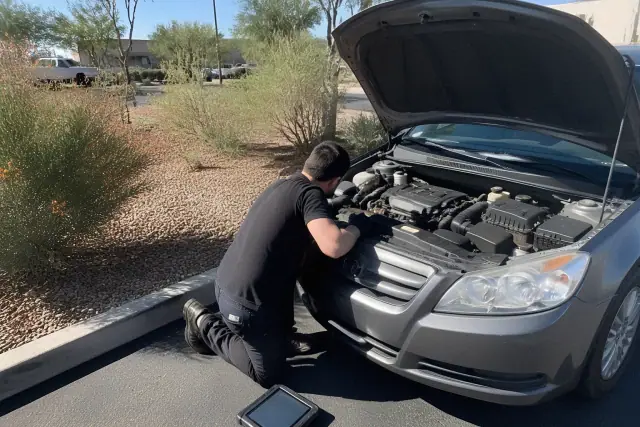
Mechanic inspecting a car engine in a sunny parking lot in Phoenix, AZ.

Dealer-Lot Purchases

An independent mechanic works for the buyer and has no stake in whether a dealership closes the sale. On-site inspection lets the vehicle remain on the lot while the buyer receives a separate assessment of mechanical, electrical, structural, and driving condition.

  • Ask the dealer to authorize the inspection
  • Keep the vehicle on the dealer lot
  • Request a cold-start evaluation when possible
  • Compare physical findings with the vehicle history
  • Use the report to request repairs or reconsider the deal
Request Estimate
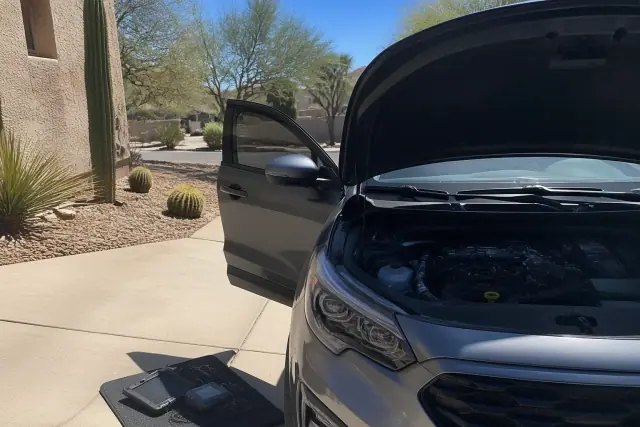
A car with its hood raised for a pre-purchase inspection on a concrete driveway in Phoenix, AZ.

Sedans, SUVs & Trucks

Standard sedans, SUVs, and trucks receive the same core evaluation, with attention adjusted to vehicle size, condition, and accessible components. The inspection brings together scan data, physical measurements, fluid observations, electrical testing, and road behavior.

  • OBD-II stored and pending code scan
  • Brake, tire, steering, and suspension checks
  • Battery, alternator, starter, and accessory testing
  • Cooling, AC, belt, hose, and fluid review
  • Written findings with photos and recommendations
Request Estimate
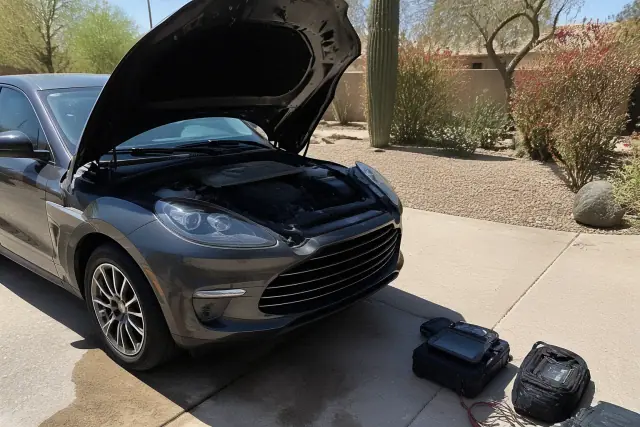
Technician performing a pre-purchase car inspection on a luxury vehicle in Phoenix, AZ.

Luxury & Exotic Vehicles

Luxury or exotic vehicles may require specialized diagnostic tools and a deeper inspection scope. Vehicle complexity can affect appointment planning and cost, so the model and available records should be discussed before the assessment.

  • Confirm model-specific tool requirements
  • Share available service and repair records
  • Review electronic and mechanical warning indicators
  • Match inspection depth to vehicle complexity
  • Confirm scope and pricing before arrival
Request Estimate
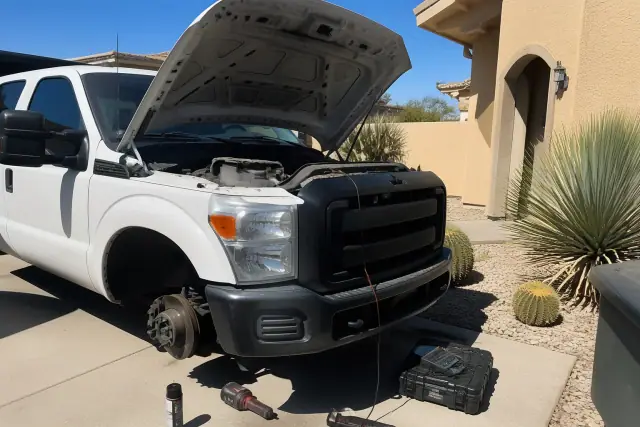
Technician performing a commercial vehicle inspection in a residential yard in Phoenix, AZ.

Commercial & Fleet Vehicles

Commercial and fleet pre-purchase inspections are priced per vehicle according to the number of units and the inspection depth required. A consistent checklist and documented findings help buyers compare vehicles while keeping each unit's condition separate.

  • Define the number and types of vehicles
  • Set the inspection depth for each unit
  • Provide available vehicle and service records
  • Apply a consistent mechanical checklist
  • Document findings by individual vehicle
Request Estimate
Independent Buyer Support

A Better Way to Evaluate a Used Vehicle

The strongest buying decision combines access to the actual vehicle, a disciplined diagnostic process, and documentation the buyer can review after the appointment. Our mobile approach is built around those three needs rather than a generic walk-around or a seller-controlled opinion.

On-Site Vehicle Assessment

We come to the vehicle in a driveway, garage, apartment complex, or dealer lot, including settings such as Ahwatukee or north Phoenix. Inspecting the car where it sits avoids a shop drop-off and can preserve useful cold-start and overnight-leak evidence.

ASE-Aligned Diagnostic Process

Technicians follow inspection protocols consistent with National Institute for Automotive Service Excellence standards. The checklist moves point by point through engine, transmission, brakes, suspension, electrical, cooling, frame, and road-test condition using tools such as scanners, multimeters, load testers, and tread gauges.

Written Report With Photos

Every inspection produces written findings, photos of problem areas, severity-ranked issues, estimated repair costs, and recommendations. The buyer can use that record to negotiate price, ask for repairs before closing, or decide the risk is too high.

What Sets Us Apart

Why Phoenix Buyers Choose Our Inspections

Phoenix Mobile Car Mechanic evaluates the same engine, brake, electrical, ignition, AC, and cooling systems our mobile team repairs. That practical system knowledge, combined with a buyer-focused inspection and local experience from Arcadia and Ahwatukee to Sun City, helps turn warning signs into clear next steps rather than a vague pass-or-fail result.

Request an Inspection

Hidden Engine or Transmission Faults

A clean exterior cannot rule out stored misfire or fuel-trim codes, gasket leaks, rough idle, blue or white exhaust smoke, or a transmission that slips only when hot. Scan data, fluid condition, cold-start behavior, and a permitted road test help expose faults a quick seller demonstration may miss.

Brake and Suspension Wear

Uneven tire wear, pulling, clunks over bumps, excessive bounce, leaking struts, and play in ball joints or tie rods can signal costly chassis work. These symptoms are especially important on vehicles with long highway use or repeated travel over Phoenix's expansion-joint-heavy roads.

Weak Battery or Charging System

Corroded terminals, dim headlights at idle, slow windows, sluggish cold cranking, or flickering dashboard lights may trace back to a weak battery, failing alternator, bad ground, or wiring damage from rodents. Load and voltage testing help distinguish a minor connection problem from a charging-system repair.

Heat-Stressed Cooling and AC Components

Phoenix heat accelerates wear on rubber hoses, belts, seals, radiators, and AC components. Coolant condition, pressure behavior, hose integrity, leaks, and AC performance matter because a marginal system may appear acceptable until the engine reaches full summer operating temperature.

Prior Collision or Flood Damage

Cosmetic work can conceal frame repairs, replaced panels, airbag deployment, or water intrusion. Overspray, mismatched paint texture, uneven gaps, altered structural fasteners, trunk water lines, musty trim, and unusual corrosion patterns provide physical evidence that may not appear in a clean history report.

Title, Lien, or History Gaps

A mechanical inspection should be paired with review of the title, registration, odometer history, salvage or rebuilt status, and available lien records. Physical findings can challenge an incomplete repair history, while lien confirmation through the Arizona Motor Vehicle Division helps a private-party buyer avoid inheriting an unresolved loan balance.

How it works

Our Pre-Purchase Inspection Process

The inspection follows a repeatable path from permission and documentation through physical checks, diagnostics, a road test when allowed, and a final buyer report. The sequence keeps observations tied to the vehicle's records and helps separate immediate concerns from items that can be planned or negotiated.

01.

Confirm Access and Vehicle Details

Obtain the seller's permission, confirm where the car is parked, and provide the VIN plus any available service records. Plan for a technician to spend about 45 minutes to an hour with the vehicle, including a short road test if the seller approves it.

02.

Review Documents and History

We review the title, registration, and available vehicle history information for salvage or rebuilt status, odometer discrepancies, prior lien records, and maintenance context. This paperwork guides closer attention without replacing the physical inspection.

03.

Inspect Exterior, Interior and Structure

A full walk-around covers panels, paint, glass, tire wear, undercarriage condition, frame clues, and signs of water intrusion. Inside, we check upholstery, electronics, HVAC operation, warning lights, and other evidence of use or prior damage.

04.

Test Mechanical and Electrical Systems

We scan diagnostic codes and check the engine, transmission, brakes, suspension, battery, alternator, starter, cooling system, fluids, belts, hoses, AC, and ignition-related symptoms. Measurements and physical observations are recorded on the inspection checklist.

05.

Evaluate the Vehicle on the Road

When permission is available, a road test checks acceleration, braking, steering alignment, shift points, suspension response, and unusual noises under load. Real driving data can expose hot-operation or movement-related problems that a stationary check cannot reproduce.

06.

Receive Findings and Recommendations

The final report documents findings and photos, ranks concerns by severity, includes estimated repair costs, and gives a clear recommendation. Buyers can use the information to proceed, renegotiate the price, request repairs, or walk away.

Buy With Better Information

Schedule a Pre-Purchase Car Inspection

Before you buy a used vehicle in Phoenix, arrange an independent on-site inspection at the seller's driveway, dealer lot, or your home. Share the vehicle details and location so the diagnostic scope, access, and cost are clear before the appointment.

Buyer Questions

Pre-Purchase Car Inspection FAQs

These answers explain how mobile pre-purchase inspections work in Phoenix, what the assessment covers, and how to prepare before a private-party or dealer-lot appointment.

Call About an Inspection

You do not need to take the vehicle to a shop because Phoenix Mobile Car Mechanic comes to the private seller's driveway, dealer lot, or your home. Get the seller's permission, provide the location and VIN, and have any available service records ready. A short road test can be included when the seller allows it.

The inspection covers engine and transmission condition, brakes and suspension, battery and charging performance, cooling and fluids, exterior and interior condition, structural clues, and diagnostic codes. It also includes documentation review and a road test when permission is available, followed by written findings, photos, and recommendations.

Plan for about 45 minutes to an hour with the vehicle. That window includes the physical and diagnostic checks plus a short road test when the seller permits one.

Independent mechanic pre-purchase inspections in the Phoenix area typically run between $100 and $200, depending on vehicle type and inspection depth. Vehicle size, specialized tool requirements, distance from central Phoenix, and the number of fleet units can affect the final price. Confirm the specific scope and cost before the appointment.

A mobile inspection evaluates the vehicle where it is already parked, so a private seller does not have to drive across town and a dealer does not have to release the car from the lot. Seeing the vehicle cold and in its normal setting can also reveal startup rattles, overnight fluid puddling, and early idle behavior.

Yes, the mobile process supports vehicles at private-seller driveways and dealer lots as long as the seller authorizes access. The independent inspection is performed for the buyer and does not depend on the seller's own assessment of the car.

We use an OBD-II scanner to review stored and pending codes and physically evaluate leaks, idle quality, fluid condition, engagement, and shift behavior. A road test can reveal slipping, harsh shifts, delayed engagement, or unusual noise under load when the seller permits it. No inspection can predict every future failure, but these checks identify visible and testable warning signs before purchase.

We inspect frame rails, unibody seams, panel gaps, paint texture, overspray, structural fasteners, VIN plates, and airbag-related clues for evidence of prior collision work. Flood checks include trunk water lines, musty carpet or headliner, corrosion on seat-rail bolts, and moisture behind interior trim. These physical signs can reveal repair history that paperwork alone may miss.

A short road test is included when the seller allows the technician to drive the vehicle. It evaluates acceleration, braking, steering alignment, transmission shift points, suspension response, and unusual noise under load that a stationary check may not reveal.

You receive a written report with findings, photos of problem areas, issues ranked by severity, estimated repair costs, and recommendations. The report is designed to help you proceed, renegotiate, request repairs before closing, or walk away from the deal.

The mechanical inspection can be coordinated with review of the title, registration, vehicle history, odometer information, and available lien records, but buyers should independently confirm lien status through the Arizona Motor Vehicle Division. Combining paperwork checks with the physical inspection helps address both ownership and condition risks.

Inspections can cover sedans, SUVs, trucks, classic cars, and commercial or fleet vehicles. Luxury and exotic models may require specialized diagnostic tools, while fleet pricing depends on the number of units and inspection depth. Share the exact vehicle details when scheduling so the scope can be confirmed.

Temperatures that regularly top 110 degrees from May through September accelerate wear on batteries, rubber hoses, belts, seals, AC components, and cooling systems. An inspection pays close attention to those areas because a marginal radiator, weak charging system, or failing compressor may not show its full symptoms during a short drive.