Proudly serving Phoenix, Glendale, Scottsdale, Tempe, Mesa, Chandler & surrounding areasCall or Text 24/7: 480-210-2603

Mobile Auto Repair & Engine Diagnostics in Glendale, AZ

Phoenix Mobile Car Mechanic brings certified check engine light diagnostics and mobile auto repair to driveways, office lots, parking areas, and roadside locations throughout Glendale, Arizona. We use professional-grade OBD-II scanners for accurate engine diagnostics at your vehicle. Our services also include brake repair, battery and alternator replacement, starter replacement, oil changes, AC service, cooling system repair, ignition work, and pre-purchase inspections. You get the tools and parts quality expected from a fixed shop without towing the vehicle across town.

Glendale summers can push pavement and engine-bay temperatures well past 150 degrees, while dust and long idle times on Bell Road or Loop 101 add stress to batteries, cooling systems, alternators, and ignition parts. A warning light may start with a gas cap, sensor, or misfire, but delaying diagnosis can lead to engine damage or an emissions-test failure. We read stored and pending codes, live sensor data, and freeze-frame conditions before recommending a repair. That confirm-before-repair approach helps avoid guesswork and unnecessary parts replacement.

Mobile service covers Arrowhead Ranch, Historic Downtown Glendale, Sahuaro Ranch, Berkeley Park, and areas around State Farm Stadium, Westgate Entertainment District, and Arrowhead Towne Center. We also travel to Peoria, Phoenix, Surprise, Litchfield Park, Avondale, El Mirage, Youngtown, and locations throughout Maricopa County.

★ ★ ★ ★ ★4.9/5 Average Rating - 20+ Years of Experience - Glendale Mobile Mechanic Specialists - Residential & Commercial
Mobile Auto Repair

Mobile Mechanic Services in Glendale, AZ

With roughly 248,325 residents spread across Glendale, our mobile setup brings diagnostics and repair directly to the vehicle. The service menu ranges from check engine light testing and brake work to electrical, cooling, AC, ignition, maintenance, and used-car inspection services. Mobile diagnostic coverage is also available in Scottsdale, AZ , while the sections below focus on Glendale's heat, dust, and traffic conditions.

Check Engine Light Diagnostics

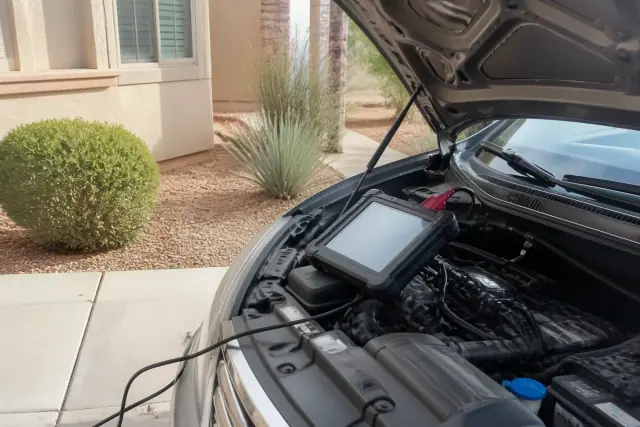
Mobile mechanic performing check engine light diagnostics on a car in a Glendale, AZ residential driveway.

We connect a professional-grade OBD-II scanner, pull stored and pending diagnostic trouble codes, and compare freeze-frame information with manufacturer specifications. Live sensor readings help isolate the actual fault instead of treating a code as an automatic instruction to replace a part.

Explore Service

Brake Repair

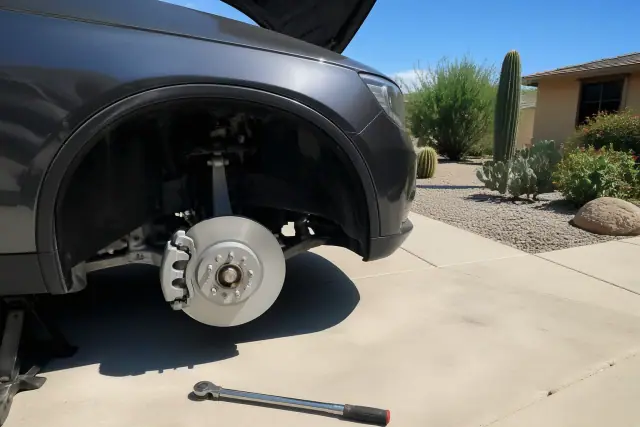
New brake rotor and caliper on a car parked on a concrete driveway in Glendale, AZ with desert landscaping.

Brake service begins with an inspection of pads, rotors, calipers, and brake-fluid condition. Stop-and-go driving on Glendale Avenue and 59th Avenue can accelerate pad wear, so we check thickness against manufacturer minimums before metal-on-metal contact damages the rotors.

Explore Service

Car Battery Replacement

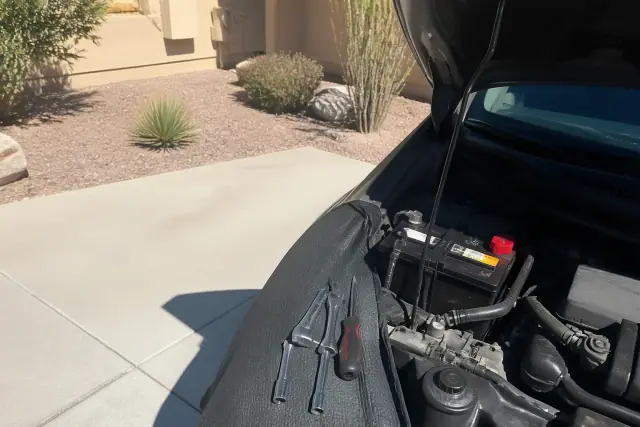
A new car battery installed in a vehicle parked on a concrete pad at a home in Glendale, AZ.

Desert heat shortens battery life, and a battery rated for three years in a milder climate may struggle past two Glendale summers. We test cranking amps and charging-system voltage, then install a properly rated replacement matched to the vehicle's specifications when needed.

Explore Service

Alternator Replacement

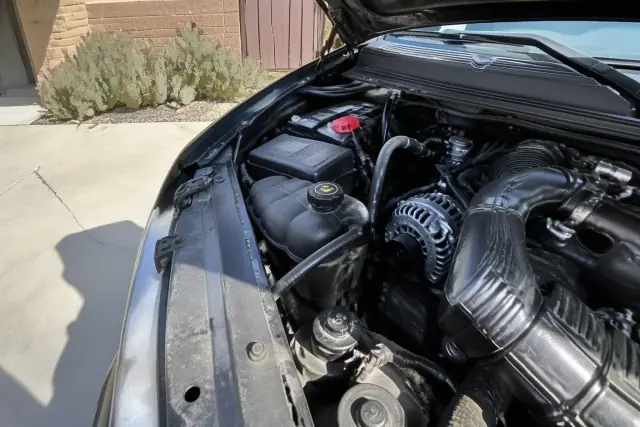
New alternator installed in a car with an open hood on a concrete driveway in Glendale, AZ.

Dimming lights, a battery warning light, or a slow crank can point to an alternator that is no longer holding a proper charge. We test output voltage under load and replace the alternator on site when the results confirm the fault.

Starter Replacement

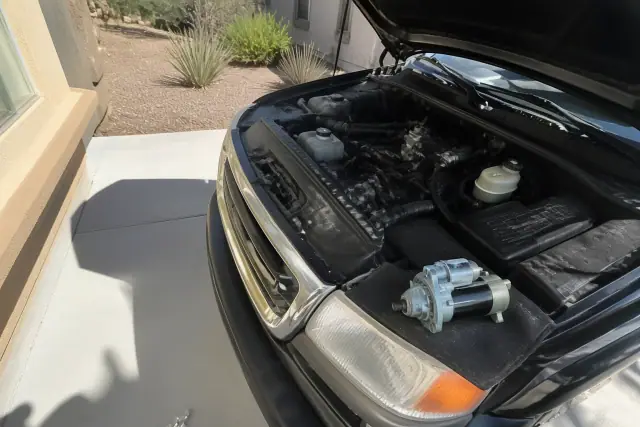
Vehicle with an open hood undergoing a starter replacement on a concrete driveway in Glendale, AZ.

Clicking sounds or a no-crank condition may come from the starter motor, solenoid, or another part of the starter circuit. We test the circuit, confirm the failed component, and replace the starter at the vehicle's location when required.

Oil Change

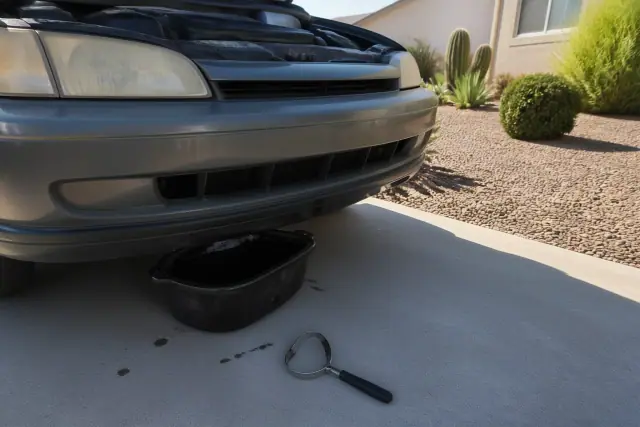
Mobile mechanic performing an oil change on a vehicle parked on a residential concrete pad in Glendale, AZ.

Extreme underhood temperatures can break down conventional oil faster, making the correct oil and service interval especially important in Glendale. We drain the old oil, replace the filter, and refill with the manufacturer-specified grade in conventional, synthetic-blend, or full-synthetic form as appropriate.

AC Repair & Recharge

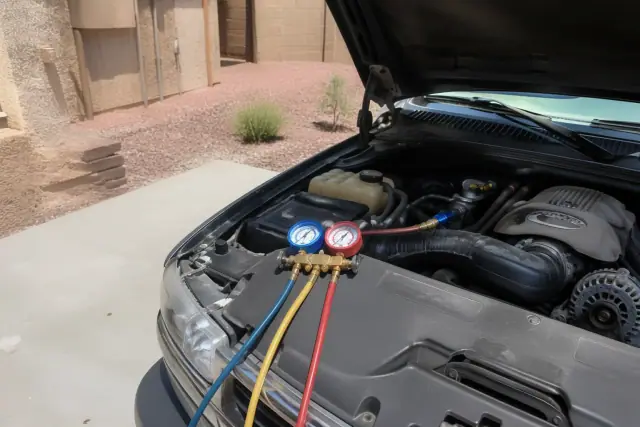
Technician checking car AC system with pressure gauges in a residential driveway in Glendale, AZ.

With summer highs regularly topping 110 degrees, vents that blow warm air need more than a quick guess. We check for refrigerant leaks and compressor operation, then recharge the system using EPA-regulated refrigerant handling practices under Section 608/609 guidelines.

Radiator & Cooling System Repair

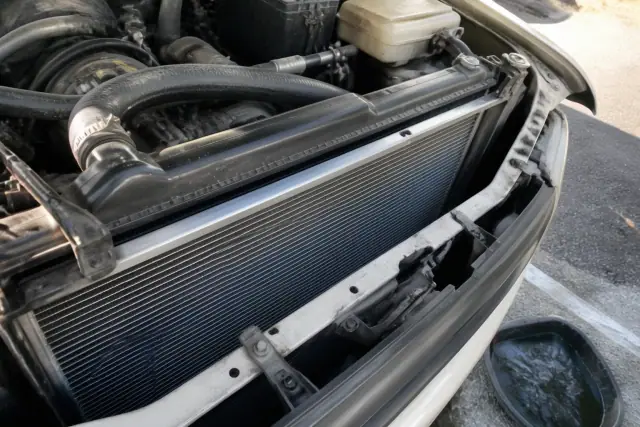
A new radiator installed in a car engine bay at an apartment complex parking lot in Glendale, AZ.

Cooling-system service starts with a pressure test, leak check, and inspection of the radiator, thermostat, hoses, and coolant condition. Depending on what the testing shows, we flush or replace coolant to manufacturer specification or repair the component causing the vehicle to overheat.

Spark Plugs & Ignition Coil Replacement

Mechanic replacing spark plugs and ignition coils on a vehicle in a Glendale, AZ residential driveway.

Worn spark plugs and failing ignition coils can cause rough idle, misfires, and reduced fuel economy. We identify the affected cylinder, replace plugs to factory gap specification or change the failed coil, and address the fault before continued misfiring strains the catalytic converter.

Pre-Purchase Car Inspection

Mobile mechanic inspecting a car with the hood open on a driveway in Glendale, AZ.

A mobile pre-purchase inspection examines engine condition, fluid leaks, brake wear, battery and charging-system health, and stored OBD-II codes before you buy a used vehicle. The findings give you a clearer picture of the car's condition before you sign anything.

Diagnostic Standards

How to Choose Mobile Auto Service in Glendale

A useful diagnostic visit should do more than produce a code number. Look for professional scanning equipment, live-data analysis, component testing, clear explanations, and repairs completed to vehicle specifications at the location where the car is parked.

Professional OBD-II Scanning

Professional-grade scanners retrieve stored, pending, and manufacturer-specific information from the ECU. That depth matters because a basic reader may show a code without revealing the conditions that caused it.

Live Data and Freeze Frames

Live readings let us watch oxygen-sensor voltage, fuel trims, and coolant temperature while the engine runs. A freeze frame might show a cold engine, fuel trim at plus 18 percent, and sluggish oxygen-sensor response, providing context that a code alone cannot.

Root-Cause Verification

One symptom can have several causes, so we cross-check codes with related data and the vehicle's service history before replacing anything. Confirming the failing component reduces wasted money and avoids a repair that leaves the original problem unresolved.

Mobile Service at Your Location

We diagnose the vehicle at home, at work near the Loop 101 corridor, in a parking area, or at a roadside location. This eliminates the need to tow a rough-running or no-crank vehicle across Glendale just to learn what failed.

Manufacturer-Spec Service

Brake-pad thickness, spark-plug gap, oil grade, coolant, replacement battery rating, and other service details are checked against the vehicle manufacturer's requirements. Matching the repair to the specific vehicle is more reliable than using a one-size-fits-all assumption.

Plain-Language Answers

A diagnostic trouble code should come with an explanation of what it means, what testing confirmed, and which component actually needs attention. We walk through those findings in plain language instead of handing you a code and leaving you to guess.

Glendale Driving Conditions

Common Vehicle Problems in Glendale

Sustained heat, dust, and stop-and-go traffic can expose weak electrical, cooling, ignition, and AC components quickly. These are the symptoms and warning signs our on-site testing is designed to sort out before the wrong part is replaced.

Request Diagnostics

Check Engine Warning

A lit check engine light can come from a loose gas cap, sensor fault, emissions leak, or damaging misfire. For many Maricopa County vehicles it is also an automatic failure at Arizona emissions testing stations, so prompt diagnosis protects both the engine and the registration process.

Rough Idle and Misfires

Rough idle may trace to a worn spark plug, failed ignition coil, vacuum leak, fuel-trim problem, or another ignition or fuel fault. Continuing to run an active misfire can overheat and damage the catalytic converter.

Overheating and Coolant Leaks

A leaking hose, thermostat issue, radiator fault, or degraded coolant can become a breakdown quickly during a Glendale summer. Pressure testing and a full cooling-system inspection identify where the heat or coolant loss begins.

Weak Battery or Charging

Slow cranking, dimming lights, and battery warnings may signal a weak battery or an alternator that is not charging correctly. Testing cranking amps and voltage under load separates a battery problem from a charging-system fault.

No-Crank Starter Problems

A click with no engine crank can point to the starter motor or solenoid, but the circuit needs testing before the starter is condemned. We confirm the source of the no-crank condition at the vehicle rather than relying on the sound alone.

Warm Air from the AC

Warm airflow can result from low refrigerant, a leak, or compressor trouble. Checking the system before recharging it helps identify why cooling performance dropped instead of adding refrigerant without diagnosing the cause.

Why Choose Us

Why Choose Phoenix Mobile Car Mechanic in Glendale?

Phoenix Mobile Car Mechanic was built around the mechanical stress Glendale drivers face. Certified diagnostic work, a broad on-site repair menu, and experience with desert heat and dust support a practical process focused on confirming faults before repairing them.

Glendale Heat and Dust Experience

Local driving conditions change what deserves attention first. We account for extreme underhood heat, dust, and long summer idle periods when evaluating cooling, battery, charging, ignition, and AC concerns.

Full-Service Mobile Repairs

The same mobile visit can address common diagnostic, brake, battery, alternator, starter, oil, AC, cooling, ignition, and inspection needs. Work is performed at your location with the tools and parts quality expected from a fixed repair shop.

Certified Diagnostic Work

Certified diagnostic and repair work comes directly to the vehicle. Professional equipment, manufacturer specifications, and a confirm-before-repair method guide the recommendation instead of guesswork or repeated parts swapping.

Simple Process

Our Mobile Diagnostic Process in Glendale

The process starts at the vehicle and moves from electronic evidence to physical verification. Each step is designed to explain the warning or symptom clearly before a repair is recommended or completed.

01.

Meet at Your Vehicle

We bring the diagnostic and repair setup to your driveway, office lot, parking location, or roadside position in Glendale. The vehicle stays where it is while the initial concern is reviewed.

02.

Connect the OBD-II Scanner

A professional-grade OBD-II scanner connects to the vehicle's diagnostic port and communicates with the onboard computer. This provides access to more than a basic dashboard warning.

03.

Retrieve Stored and Pending Codes

We pull stored and pending trouble codes to see confirmed faults and issues the ECU has detected but may not have recorded as permanent. Related codes are considered together rather than interpreted in isolation.

04.

Review Live and Freeze-Frame Data

Live sensor values show how the engine is behaving now, while freeze-frame data records conditions when a fault was set. Manufacturer specifications provide the reference needed to spot abnormal readings.

05.

Confirm the Fault

Codes, live readings, related symptoms, and vehicle history are cross-checked to identify the actual failing component. This verification separates a cause from a symptom before parts are replaced.

06.

Explain Findings and Repair

We explain the code, supporting test results, and recommended repair in plain language. When the required work is part of our mobile service lineup, it can be completed at the vehicle using the appropriate manufacturer specifications.

What Testing Clarifies

Diagnostic Findings for Glendale Drivers

Case Study 1: Intermittent warning light: Live sensor data and freeze-frame conditions can reveal a slow oxygen-sensor response or fuel-trim change that a basic stored-code reading does not explain.

Case Study 2: Lean-code troubleshooting: P0171 or P0174 can trace to a vacuum leak, dirty mass airflow sensor, or failing fuel injector, so supporting data must identify the cause before a part is selected.

Case Study 3: Used-car decision: A pre-purchase inspection combines engine condition, leak checks, brake wear, electrical-system testing, and an OBD-II scan to provide a clearer picture before a buyer signs.

Service at Your Vehicle

Schedule Mobile
Auto Repair in
Glendale

Request an estimate or call to discuss the vehicle's warning light, no-start condition, overheating, brake concern, AC problem, maintenance need, or inspection. Phoenix Mobile Car Mechanic brings diagnostics and supported repairs to your Glendale location.

Glendale Auto Repair Help

Mobile Mechanic FAQs for Glendale, AZ

These answers explain how mobile diagnostics, common repairs, and Glendale service coverage work. For a vehicle-specific finding, the scanner data and hands-on testing need to be reviewed at the vehicle.

Call for Mobile Service

The vehicle's ECU has logged a fault from one of dozens of sensors that monitor emissions, fuel trim, ignition timing, transmission behavior, and related systems. The cause can be as simple as a loose gas cap or as serious as a misfire or failing catalytic converter. Scanning and verification are needed to tell which condition applies.

Yes. Phoenix Mobile Car Mechanic performs diagnostics and supported repairs at driveways, office lots, parking areas, and roadside locations throughout Glendale, so the vehicle does not need to be towed to a waiting room.

We retrieve stored and pending trouble codes, review freeze-frame conditions, and watch live values such as oxygen-sensor voltage, fuel trims, and coolant temperature. Those readings are compared with related codes, vehicle history, and manufacturer specifications to confirm the actual fault.

A basic reader may display a generic code but not the live streams, freeze-frame details, or manufacturer-specific information needed to interpret it. Professional equipment helps show when the fault occurred and whether the suspected component actually failed.

Heat can accelerate wear on oxygen sensors, ignition coils, and evaporative-emissions components, while an active misfire can damage the catalytic converter. A lit check engine light is also an automatic failure at Arizona emissions testing stations for vehicles that require testing. Prompt diagnosis helps protect the engine and the registration process.

SAE International uses a standardized format that starts with a system letter: P for powertrain, B for body, C for chassis, or U for network. A four-digit number follows that letter, but the code still needs context from data and testing before it points to a repair.

P0300 indicates a random or multiple-cylinder misfire. Spark plugs, ignition coils, fuel delivery, vacuum leaks, and other conditions can contribute, so the misfire needs testing before a component is replaced.

P0455 points to a large leak in the evaporative-emissions system. A loose or cracked gas cap is one possible cause, but the system should be checked rather than assuming the cap is always responsible.

P0171 or P0174 generally means the fuel-trim system is running too lean. Possible causes named in the diagnostic process include a vacuum leak, dirty mass airflow sensor, or failing fuel injector, and live data helps distinguish among them.

Yes. Mobile brake service includes inspecting pads, rotors, calipers, and brake-fluid condition, then replacing worn components on site. Pad thickness is checked against manufacturer minimums before a recommendation is made.

Yes. AC service includes checking for refrigerant leaks, testing compressor operation, and recharging the system when appropriate. Refrigerant is handled using EPA-regulated practices under Section 608/609 guidelines.

We pressure test the cooling system, look for coolant leaks, and inspect the radiator, thermostat, hoses, and coolant condition. The results determine whether the vehicle needs a component repair, a flush, or coolant replacement to manufacturer specification.

A weak battery may show low cranking capacity, while a failing alternator may cause dimming lights, a warning light, or poor output under load. Clicking or a no-crank condition can point toward the starter motor or solenoid. Testing cranking amps, charging voltage, and the starter circuit identifies which system is responsible.

The inspection covers engine condition, fluid leaks, brake wear, battery and charging-system health, and a full OBD-II scan for stored codes. It is designed to provide a clearer picture of a used vehicle before you buy it.

Glendale coverage includes Arrowhead Ranch, Historic Downtown Glendale, Sahuaro Ranch, Berkeley Park, and areas near State Farm Stadium, Westgate Entertainment District, Arrowhead Towne Center, and Luke Air Force Base. Service also extends to Peoria, Phoenix, Surprise, Avondale, Litchfield Park, El Mirage, Youngtown, and locations throughout Maricopa County.