Verify Credentials and Coverage
Ask who will perform the repair, whether that technician is ASE-certified, how much hands-on experience they have, and whether the business carries licensing and liability insurance.
Phoenix Mobile Car Mechanic recommends asking about credentials, a written estimate, warranty coverage, parts grade, diagnostic tools, and whether the repair can be done safely at your location before work begins. Clear answers help you compare the job's scope, cost, and limits before the first wrench turns.
Ask who will perform the repair, whether that technician is ASE-certified, how much hands-on experience they have, and whether the business carries licensing and liability insurance.
The estimate should separate parts, labor, and any trip charge, identify whether parts are OEM, OEM-equivalent, or economy aftermarket, and explain warranty coverage.
Ask whether the work can be completed safely in a driveway, office lot, or parking garage, or whether it needs a lift, alignment rack, engine hoist, or climate-controlled bay.
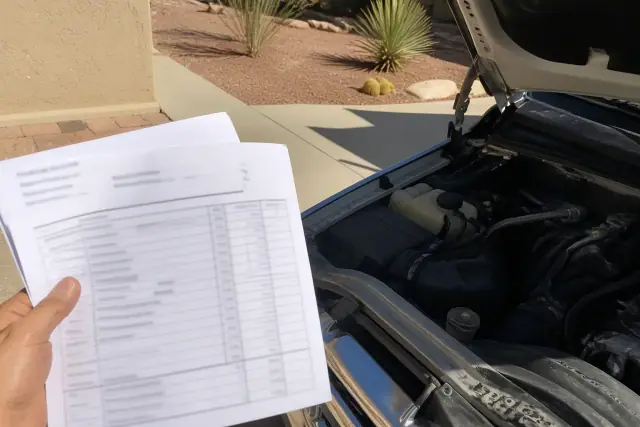
A clear estimate separates parts, labor, and any trip charge so the customer can approve the scope before work begins.
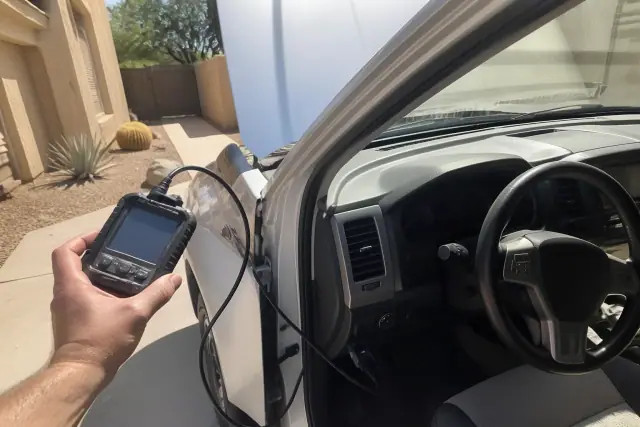
Professional scanning should read manufacturer-specific codes and support a diagnosis instead of turning symptoms into a guess.
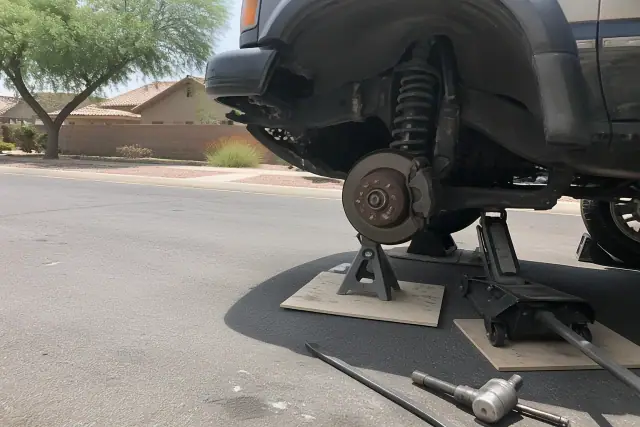
Rated jack stands and wheel chocks matter on hot pavement. Work that needs a lift or alignment rack belongs in a shop.
Confirm ASE certification through the National Institute for Automotive Service Excellence, business licensing, liability coverage, and repair experience.
Check-engine work calls for professional OBD-II scanning, while AC service requires EPA Section 609-compliant refrigerant recovery equipment rather than a store-bought can.
Review the itemized price, parts quality, warranty terms, and what happens if the diagnosis differs from the symptoms described by phone.
Transmission rebuilds, frame work, and full engine teardowns need equipment and controlled conditions that a driveway cannot provide.
| Ask About | A Clear Answer Covers | Warning Sign |
|---|---|---|
| Credentials | ASE certification, hands-on experience, business licensing, and liability insurance | Credentials or coverage cannot be explained |
| Estimate | Parts, labor, trip charges, parts grade, and warranty terms in writing | Only a verbal total is offered |
| Diagnostics | OBD-II or manufacturer-level scanning before the repair is quoted | The quote is based on symptoms alone |
| Mobile fit | The technician explains site safety and when a lift, rack, or hoist is required | Every repair is promised for the driveway |
| Approval | Any changed finding and updated scope require your sign-off | Work begins before the estimate is approved |
A trustworthy conversation starts with credentials and a diagnosis, not a price based only on a symptom. Ask who will do the work, how long they have repaired vehicles, and whether certification, licensing, and insurance apply to the job. For check-engine work, confirm that the scanner reads manufacturer-specific codes; for AC work, confirm that the technician will diagnose leaks and recover refrigerant with compliant equipment. Before authorizing anything, compare the parts grade, itemized estimate, trip charge, and written warranty, and require an updated scope if the findings change.
Phoenix conditions affect safe on-site work and scheduling. Asphalt surface temperatures regularly push past 150 degrees in summer, while summer highs regularly top 110 degrees, so a 2 p.m. no-start in an open lot off Bell Road is different from the same problem in a shaded driveway. Monsoon storms between June and September can delay outdoor appointments, and peak-summer AC and battery calls tighten availability across the Valley. Ask about shade, surface stability, rated jack stands, wheel chocks, and whether the repair needs a lift, alignment machine, engine hoist, or shop bay.
Is mobile service a good idea? For check-engine diagnostics, brakes, batteries, alternators, starters, oil changes, AC work, and pre-purchase inspections, it can avoid a tow and waiting room when the location is safe. In the Phoenix metro, mobile labor generally runs $80-$150 per hour versus $150-$200 or more at many dealership service departments. Typical examples are $70-$120 for an oil change with a filter and up to five quarts, roughly $150-$350 per axle for brake pads depending on rotor condition, and $80-$150 for a diagnostic scan; ask whether that scan fee will be credited if you approve the repair. Oil service may take under 30 minutes, while pre-purchase inspections can be completed at a seller's location in Tempe, Mesa, or Glendale. For stop-and-go use around I-10 and Loop 202, ask whether a brake quote accounts for rotor condition, and always confirm when the job belongs in a shop instead.
Share the vehicle, symptoms, location, and access conditions. The team can confirm whether the repair is suitable for mobile service, explain the estimate, and wait for your sign-off before work begins; card, digital payment, and cash are accepted.